Workflow Automations
Bringing context to a workflow
Redesigned Drip’s workflow automation to simplify creation, clarify logic, and embed contextual notes, helping users understand each step and optimize their workflows.
Client
Drip
Type
Product Design
Year
2025
Problem
Summary
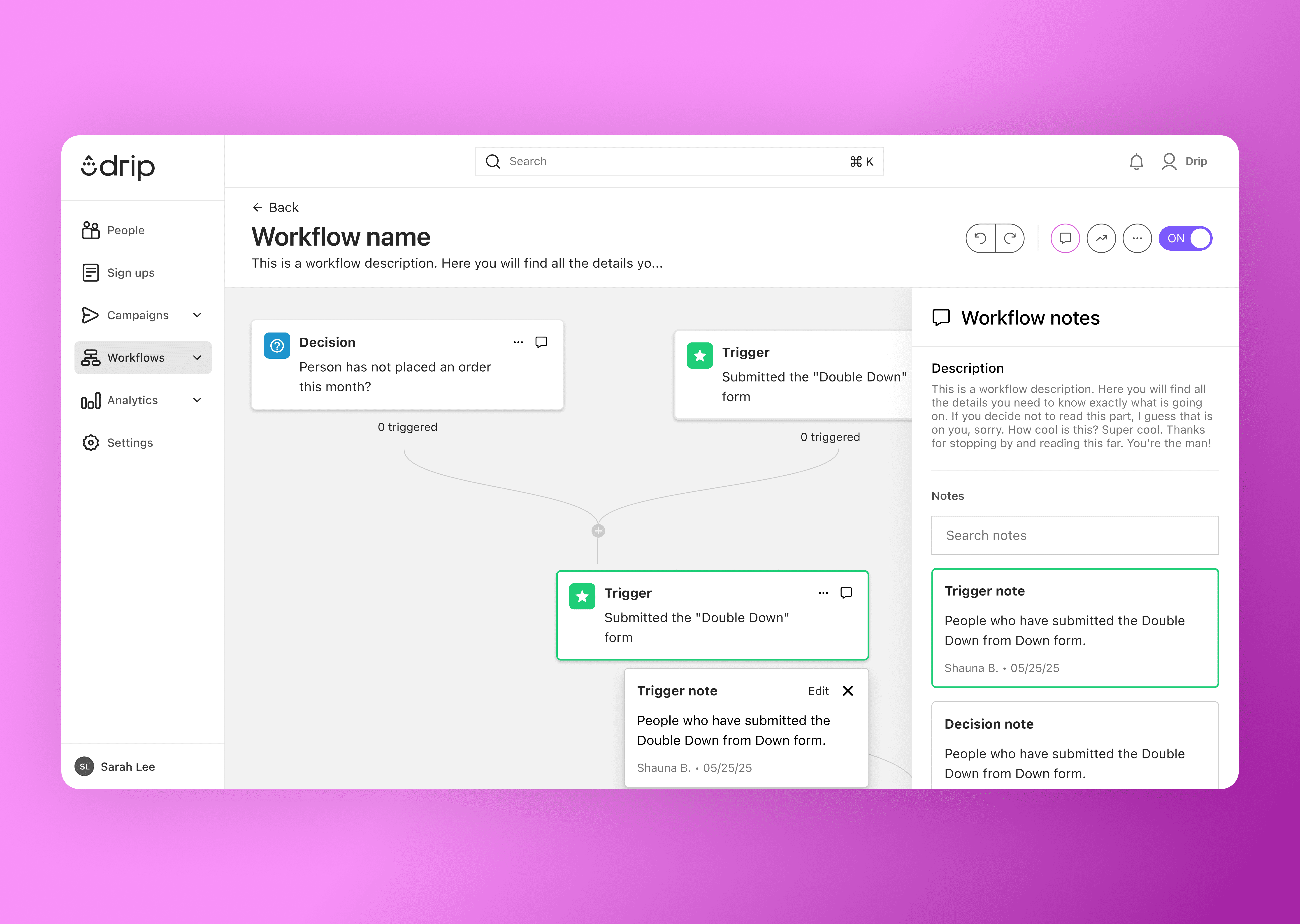
Drip’s Workflow Builder did not provide the usability, extensibility, or collaboration features needed for marketers and teams to efficiently build, understand, and maintain automations, resulting in reduced clarity and team-wide transparency over time.
Clarity & Understanding
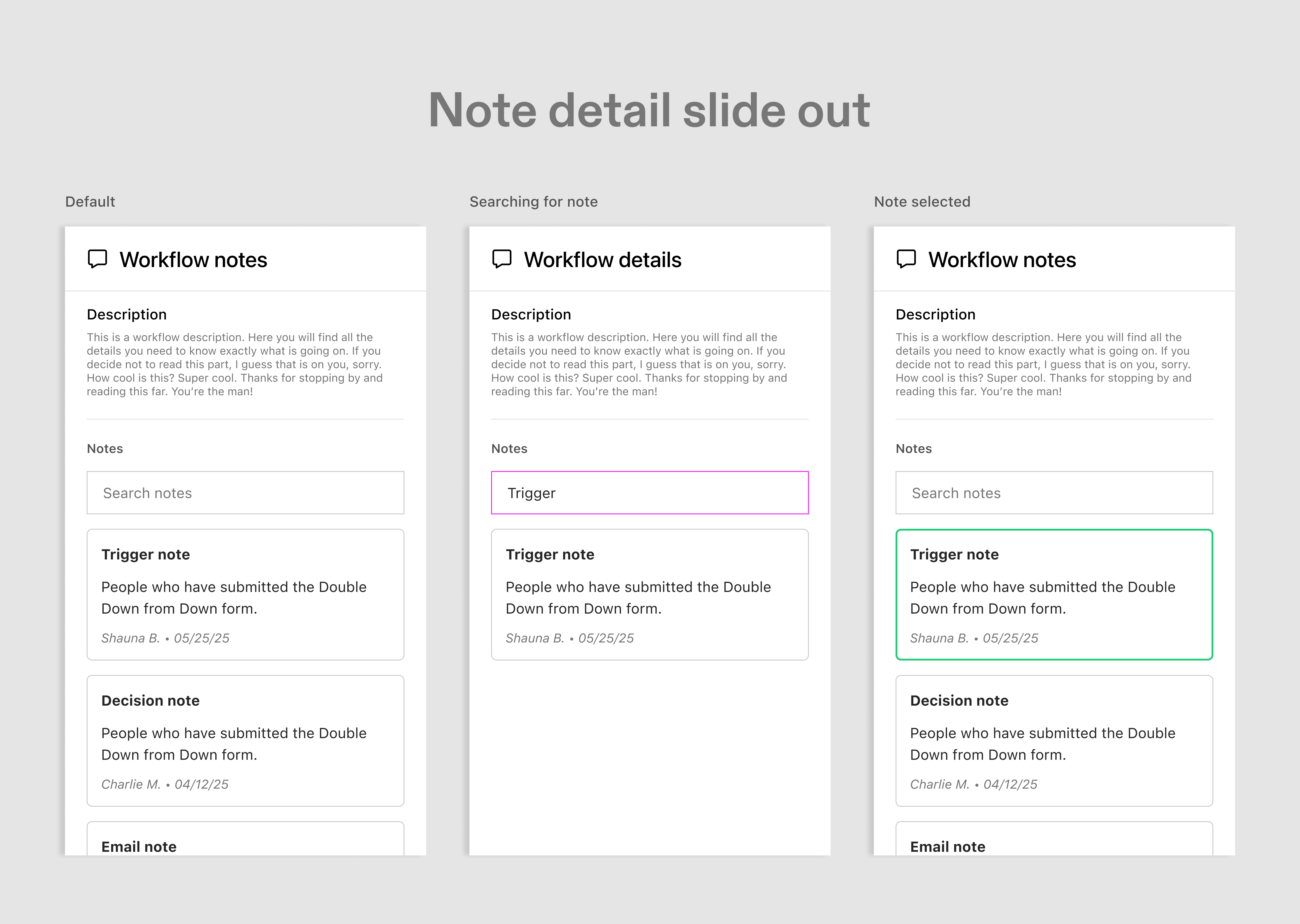
Users had no native way to annotate or summarize workflows, making it difficult to understand the purpose, logic, or intent behind existing automations—especially when revisiting older or inherited workflows.
Collaboration & Shared Context
Because workflows lacked embedded documentation or shared context, teams working asynchronously struggled to communicate decisions and changes, leading to misalignment and duplicated effort.
Usability & Editing Experience
The absence of supporting context created confusing editing experiences, where users were forced to interpret complex logic without guidance, increasing the likelihood of errors or hesitation when making changes.
Feature Adoption & Maintenance
As a result of these gaps, advanced workflow features were often underutilized, and long-term maintenance suffered as workflows became harder to trust, audit, and evolve over time.
Systemic Gaps
At a platform level, the Workflow Builder functioned as a purely technical construction tool, without affordances for documentation, knowledge-sharing, or long-term stewardship of automations across individuals and teams.
User Impact
These limitations slowed individual marketer efficiency, reduced confidence when editing or expanding workflows, and created confusion for teams returning to legacy automations without clear documentation, ultimately weakening trust in workflows as durable, collaborative assets.
Deliverables
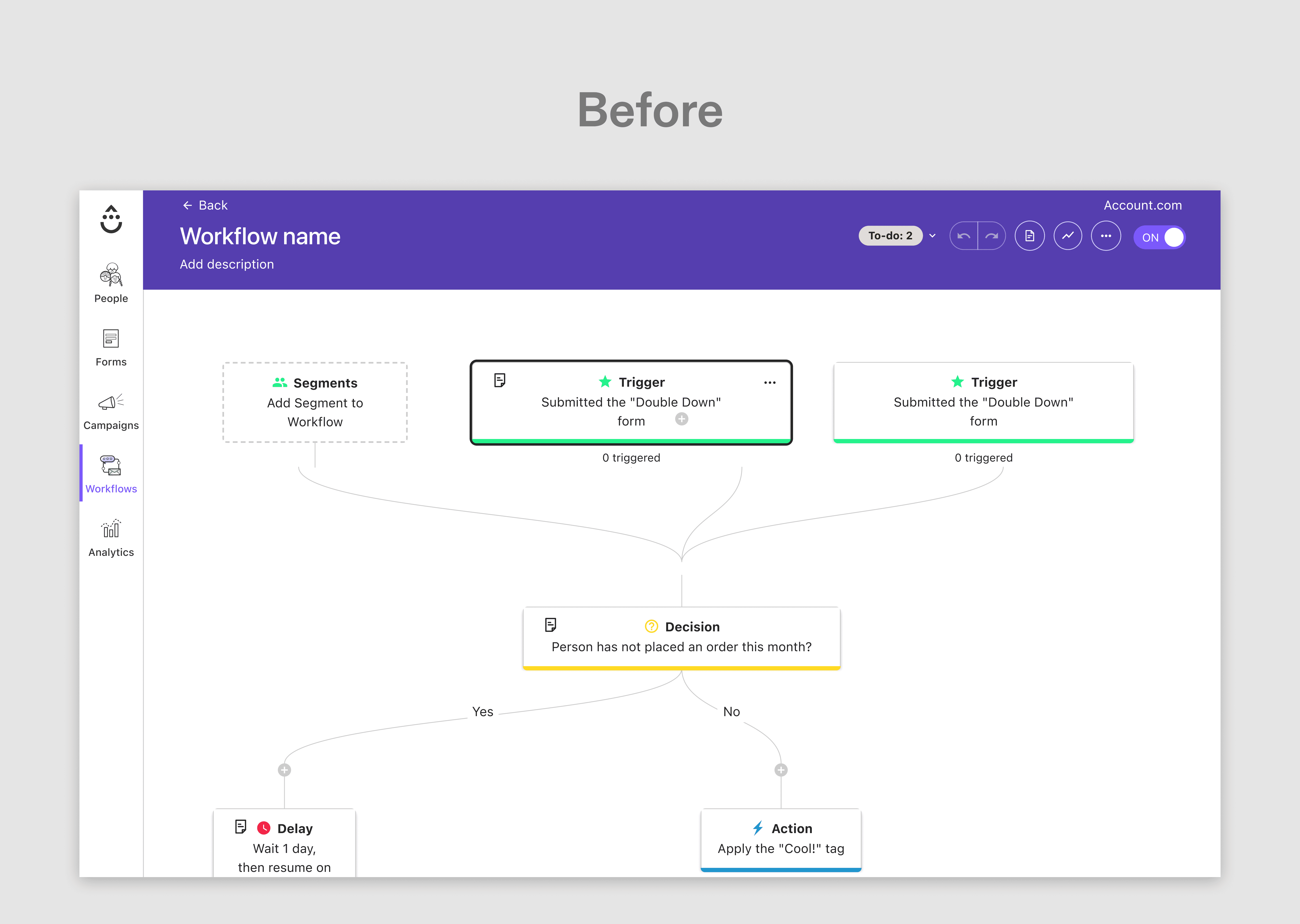
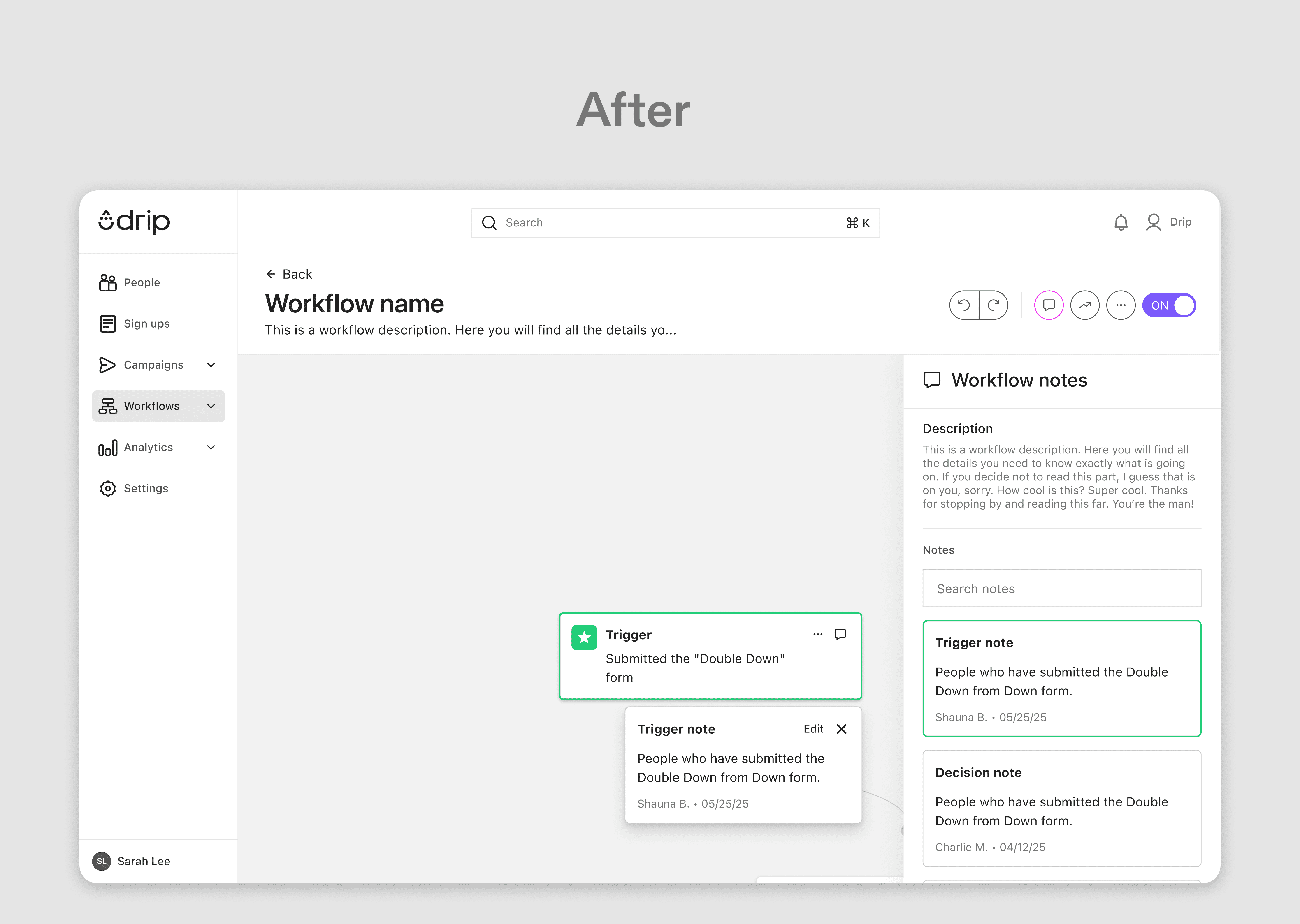
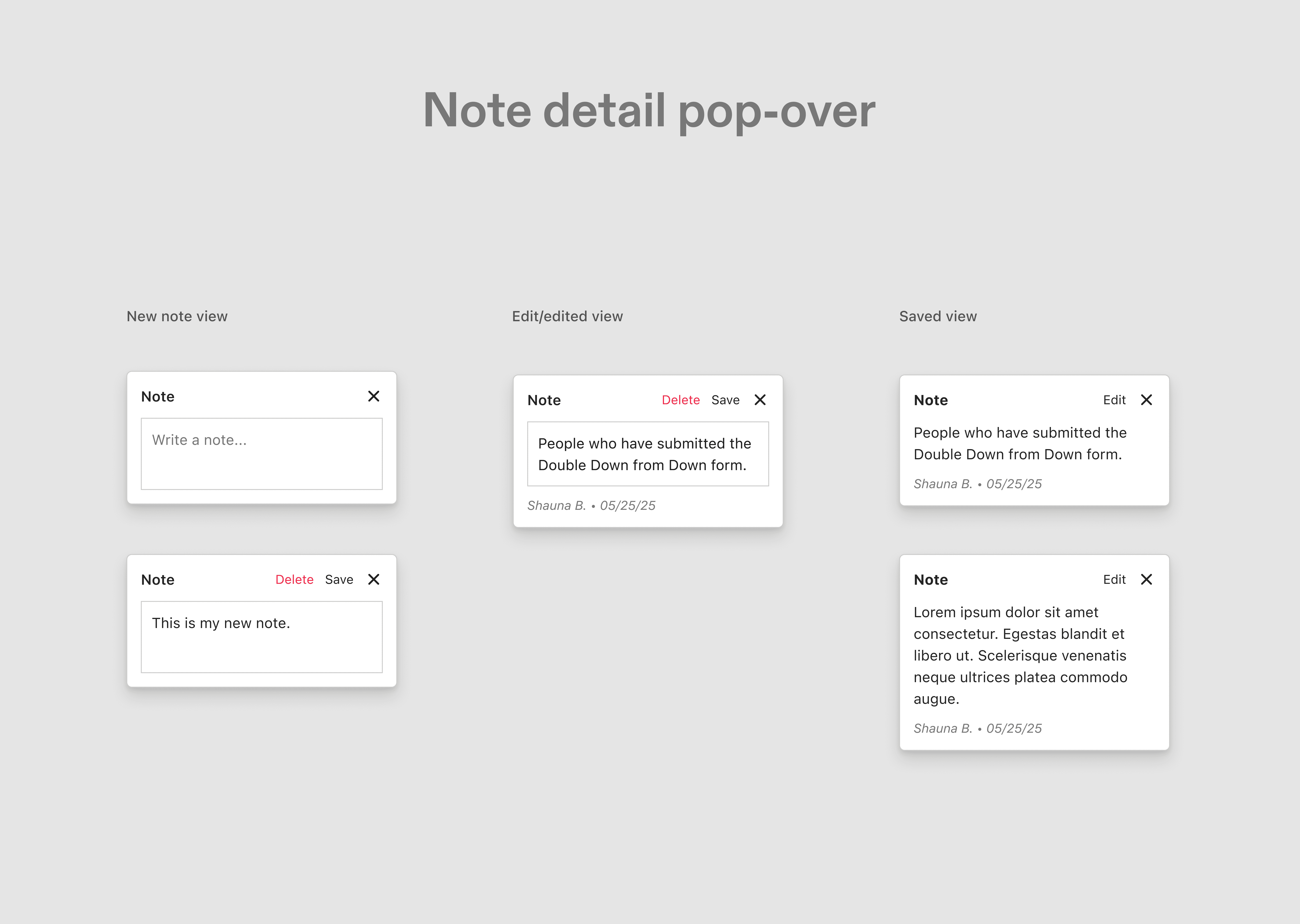
To address these challenges, I redesigned the Workflow Builder experience to support clarity, collaboration, and long-term maintainability. The new design introduced in-line annotation and note features, allowing users to document logic, share reasoning, and highlight important details directly within their workflows.
Key outcomes:
✅ Proposed and designed contextual commenting and ownership indicators to support real-time collaboration across multiple contributors.
✅ Clarified change history by surfacing who made updates and the reasoning behind them.
✅ Helped transform the Workflow Builder into a more transparent, collaborative, and scalable system.